
 My Affiliate
 Monetization
 My Points
Back vs Lay in Cricket Exchange: What Beginners Should Understand

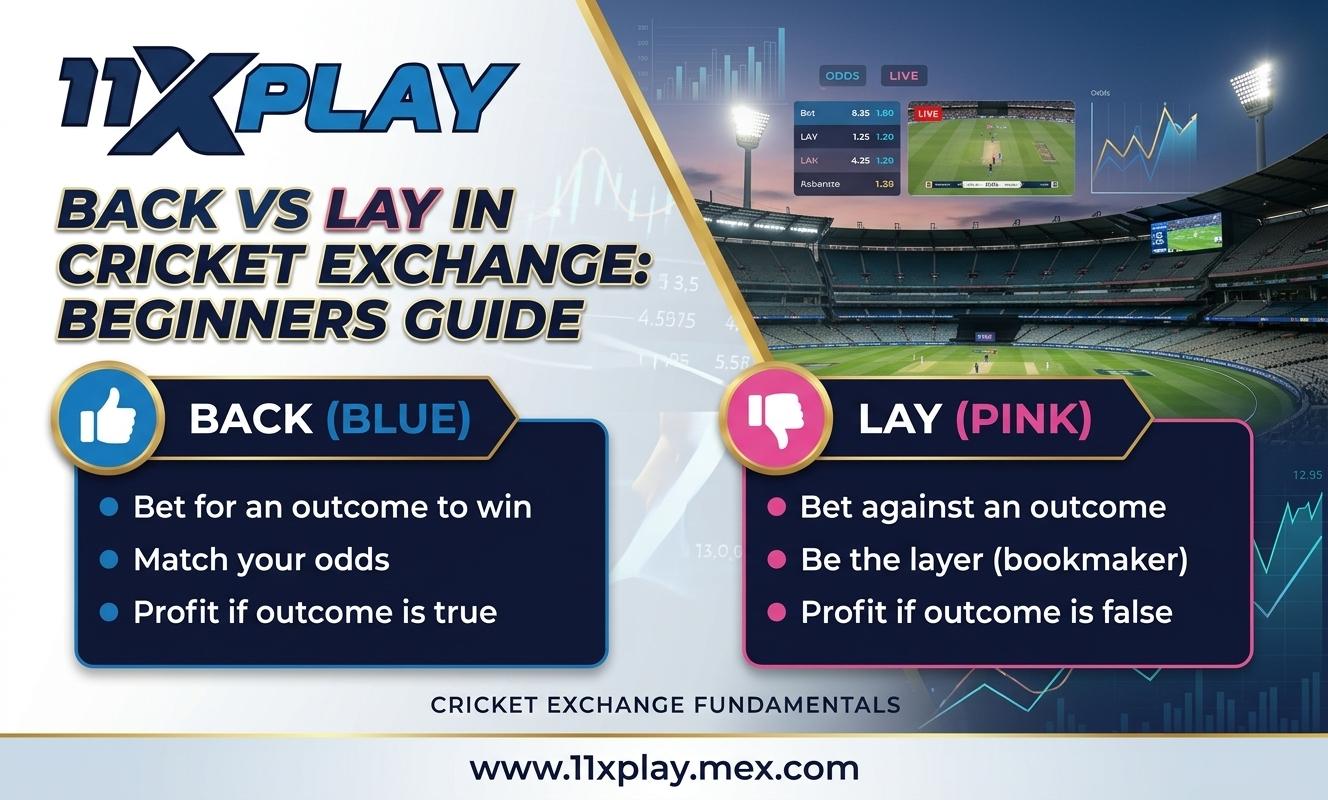
Understanding cricket exchange terminology can make match information easier to follow. On 11xPlay, beginners may come across terms such as back and lay while exploring cricket markets. These terms describe two opposite positions, and learning the difference helps readers understand how exchange prices work before making any decisions.
What Does Back Mean in Cricket Exchange?
A back position means supporting a particular outcome. For example, a person may select a team they believe will win a cricket match. If that team wins under the market’s stated rules, the selection is successful.
The price, often called odds, indicates how much a successful selection could return relative to the amount involved. However, prices can change as match conditions, team news and public interest shift.
Before interpreting a back price, understand these points:
-
Selected outcome: The team or result being supported.
-
Price or odds: The figure used to calculate a potential return.
-
Market rules: The conditions that determine whether the selection succeeds.
-
Changing conditions: New information can affect the displayed price.
For beginners, the main point is simple: backing means supporting an outcome, not guaranteeing that it will happen.
What Does Lay Mean in Cricket Exchange?
A lay position takes the opposite side of a back selection. Instead of supporting a team to win, the person taking the lay position opposes that outcome.
For instance, imagine a cricket exchange market lists Team A as a possible winner. A back position supports Team A, while a lay position takes the opposing side. If Team A wins, the back selection succeeds, whereas the lay position generally loses under standard match-winner rules.
The financial exposure also differs. A lay position may involve a liability that depends on the price and the amount accepted. Therefore, beginners should understand the potential loss before interpreting this type of market.
Back vs Lay: What Is the Main Difference?
Although both terms refer to opposite positions, their outcomes depend on the same market result.
| Feature | Back | Lay |
|---|---|---|
| Basic meaning | Support an outcome | Oppose an outcome |
| Match-winner example | Support Team A to win | Oppose Team A winning |
| When Team A wins | Back position succeeds | Lay position loses |
| When Team A loses | Back position loses | Lay position generally succeeds |
| Key consideration | Potential return | Potential liability |
These examples assume a standard match-winner market with no special settlement conditions. A draw, abandoned match or other unusual result may follow separate market rules.
How Do Odds Affect Back and Lay Positions?
Odds represent the price associated with an outcome. In a typical exchange, back and lay prices may differ because of the gap between the prices available on each side.
Consider a simple example with decimal odds of 2.00. A successful back position involving ₹100 would produce ₹200 in total returns, including the original amount, before any applicable charges.
For a lay position at the same odds, a ₹100 accepted back stake would generally create a ₹100 liability for the person laying the selection. The actual figures depend on the exchange’s calculation method and accepted amount.
This distinction matters because the amount involved is not always the same as the potential loss. Always check the displayed liability and applicable rules rather than relying on a quick estimate.
Why Do Cricket Exchange Prices Change?
Cricket matches can change direction quickly. As a result, exchange prices may move throughout a game.
Several factors can influence those changes:
-
Wickets: An early dismissal can affect a team's expected total or chasing prospects.
-
Run rate: A changing scoring rate can alter expectations during an innings.
-
Pitch conditions: Uneven bounce, turn or a slowing surface may influence match analysis.
-
Weather: Rain interruptions and revised targets can change the context of a match.
-
Team updates: Injuries, playing conditions and confirmed line-ups may affect expectations.
However, price movements do not guarantee a particular result. They reflect changing market expectations, which can still be wrong.
What Should Beginners Check Before Exploring These Markets?
Before using a cricket exchange, take time to understand its terminology and rules. First, identify the exact outcome covered by the market. Next, check the displayed price and understand whether the position involves a potential liability.
It is also useful to review the market’s settlement conditions, particularly for interrupted matches or unusual results. Avoid making assumptions based on a team’s reputation or a short run of successful performances.
If you are researching 11xPlay India, verify the site's current terms, availability and applicable local regulations before accessing any real-money features. Never share account credentials through unofficial channels, and do not treat exchange prices as reliable predictions.
For additional account-related information, you can also read a guide to safe APK installation before installing an application. Use only verified sources and check the requested permissions carefully.
How Can Beginners Understand Back and Lay More Easily?
The easiest way to learn the terminology is to compare both positions using the same hypothetical match result. Ask yourself which outcome each position supports, what happens if that outcome occurs, and how much could be lost.
You can also review the terminology and account information available through the website. If you need access to your account, check the official instructions for the 11xPlay login process and never enter personal details on an unverified page.
Likewise, anyone considering an 11xPlay ID should first confirm the service's legitimacy, account requirements and local legal status. The register process should not be treated as proof that a service is authorised in your location.
Final Thoughts
Back and lay describe opposite positions in a cricket exchange. Back means supporting an outcome, while lay means opposing it. The most important differences involve the expected result, price and potential financial exposure.
By understanding these basics, beginners can interpret cricket exchange terminology more clearly. Always read the market rules, recognise the uncertainty of sporting results and make informed decisions without assuming that any position guarantees success.

 Arabic
 French
 Spanish
 Portuguese
 Deutsch
 Turkish
 Dutch
 Italiano
 Russian
 Romaian
 Portuguese (Brazil)
 Greek
