
 My Affiliate
 Δεν υπάρχουν ειδοποιήσεις
 Οι πόντοι μου
What Should You Check Before Fitting an Igus Plain Bearing?

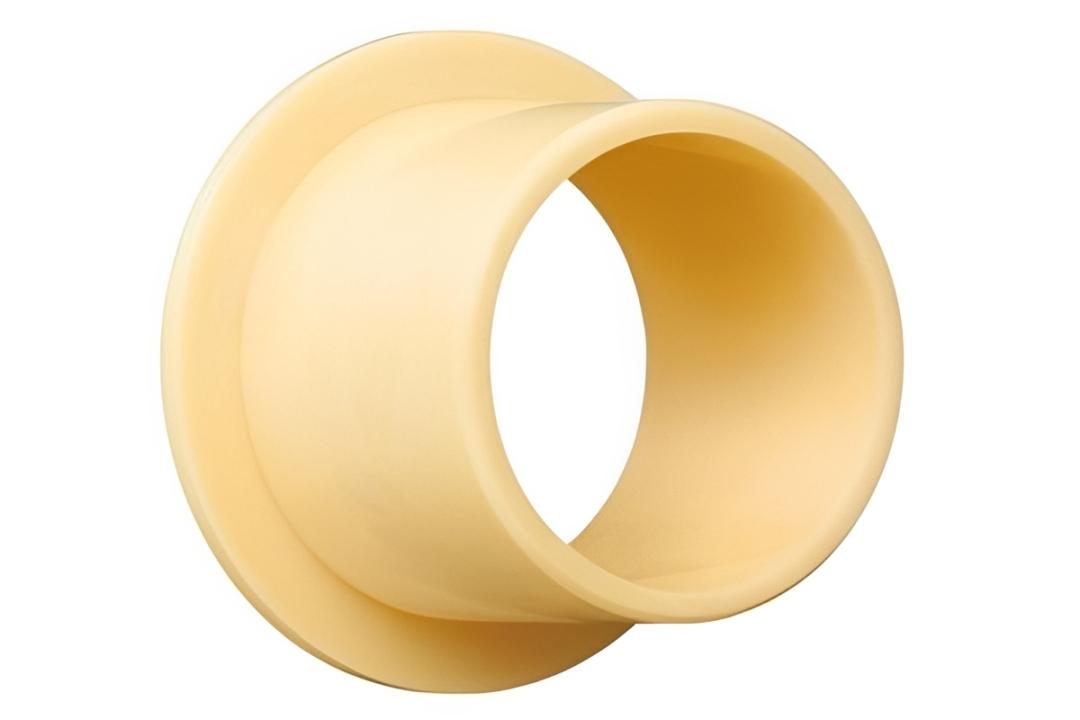
A small pivot can influence how an entire mechanism feels. If the shaft binds, rattles or moves out of alignment, the problem may be caused by the housing, the load or the way a bearing was fitted. An Igus Plain Bearing offers a compact dry-running option, but a reliable result starts with understanding the joint before pressing any component into position.
The Igus Plain Bearing, part JFM-0812-09, is an iglidur J flanged polymer sleeve bearing with an 8 mm nominal bore, 12 mm outside diameter and 9 mm body length. Its flange measures approximately 16 mm across and provides an axial locating face. Those dimensions matter when matching the bearing to a shaft, support plate and available installation space.
What Job Will the Bearing Actually Perform?
Before selecting a sleeve bearing, identify the movement involved. A hinge may rotate through a limited angle, while a continuously driven shaft completes many revolutions. A sliding element creates a different contact pattern again.
The bearing must suit the load, movement, speed and working environment.
Start with the Whole Joint, Not Just the Part Number
Ask practical questions about the assembly:
- Does the shaft rotate, oscillate or slide?
- Is the main load radial, axial or combined?
- How often does the mechanism move?
- Could dirt, cleaning agents or moisture reach the joint?
- Is the housing rigid enough to hold the fitted bearing?
- Can the technician access the component for inspection later?
These answers determine which manufacturer data and tolerances require closer attention.
Why Is Nominal Diameter Only the Starting Point?
A bearing marked 8 mm does not mean that every shaft measuring approximately 8 mm will perform correctly. The final running clearance depends on the shaft's actual diameter, housing bore, press fit and bearing material.
Polymer sleeves can change internal dimensions when pressed into a housing. Check igus guidance for the specified housing tolerance and compatible shaft dimensions instead of relying on a loose hand fit as proof of suitability.
Understand the Role of the Flange
A flanged sleeve has two related surfaces: its cylindrical section supports shaft movement, while the flange creates a locating face against the housing.
However, the flange does not automatically make a joint suitable for unlimited thrust loading. Any axial force must remain within the bearing material's published limits and the assembly's mechanical design.
How Can Installation Affect Running Performance?
A clean, correctly sized housing bore helps the bearing seat consistently. Burrs, distorted holes or misalignment can damage a polymer sleeve during insertion and affect the shaft's movement afterwards.
Use the manufacturer's recommended pressing method and support the bearing correctly. Avoid striking the flange directly with an unsuitable tool. Once installed, check that the flange sits as intended and the bearing has not been visibly distorted.
Check Surrounding Components as Well
The bearing does not work independently of the rest of the mechanism. Relevant Bearing Accessories may support particular assembly arrangements, but each accessory must be selected for its actual function. Do not assume that parts intended for rolling bearings are interchangeable with polymer plain-bearing components.
After fitting, rotate or move the shaft through the intended travel with the system made safe. Look for binding, roughness or unexpected side play. If motion feels wrong, investigate the fit rather than forcing the joint to operate.
What Makes Dry Running Useful?
The iglidur J material is intended for suitable dry-running applications, which can reduce dependence on routine external lubrication. This can be helpful where oil or grease would attract contamination or complicate maintenance.
Nevertheless, dry running is not the same as unlimited service life. Friction and wear still depend on factors such as shaft material, contact pressure, speed, temperature and the operating environment.
Compare Real Operating Conditions
A short bench test can reveal obvious installation problems, but it cannot reproduce months of duty in every environment. Consider the complete operating cycle, including startup loads, stops and periods of sustained movement.
For important mechanisms, calculate the relevant load and speed conditions using current igus material data. Keep a record of the shaft finish and housing material, since these details can influence later troubleshooting.
Where Can Misalignment Become a Problem?
Imagine a small motor driving a mechanism through a shaft supported by a polymer sleeve. If the connected components are out of line, the bearing may experience unintended side loading even when its nominal size is correct.
Suitable Flexible Couplings can accommodate specified forms of misalignment in compatible driven assemblies, but they cannot correct every layout problem. Check alignment, coupling limits and bearing loads as parts of the same design.
Watch for Changes During Service
A sensible inspection routine looks for symptoms, not just catastrophic failure:
- Increasing shaft movement or clearance.
- New vibration or noise under comparable loads.
- Scoring or unusual marks on the mating shaft.
- Unexpected resistance during movement.
- Local contamination around the joint.
These symptoms may have several causes. Inspect the complete assembly before deciding that the bearing alone should be replaced.
How Do You Decide Whether Replacement Is Necessary?
First, make the mechanism safe and compare its current movement with the original design or maintenance criteria. Inspect the bearing, housing and shaft for wear, distortion or damage.
When choosing a replacement, confirm the exact manufacturer part number, nominal dimensions and flange geometry. Similar-looking sleeves can differ in material, length or tolerance.
What Should Engineers Remember?
A flanged polymer sleeve is only as effective as the joint designed around it. Correct fit, shaft condition, alignment and duty-cycle assessment matter more than treating a nominal diameter as the entire specification.
Engineers comparing materials and sizes can examine Plain Bearings for alternatives that suit their intended motion and environment. For the JFM-0812-09, begin with the documented dimensions, validate the mating parts and assess the installed joint before putting equipment back into service.


 English
 Arabic
 French
 Spanish
 Portuguese
 Deutsch
 Turkish
 Dutch
 Italiano
 Russian
 Romaian
 Portuguese (Brazil)
